

Vietnam’s diagnostic laboratory industry may be entering one of its most important periods of expansion.
According to a July 2026 market report by Ken Research, the Vietnam’s diagnostic lab market was valued at approximately US$1.12 billion in 2025. By 2031, the market is projected to reach around US$1.83 billion, representing a compound annual growth rate of approximately 8.53%.
That represents more than US$700 million in additional market value within six years.
However, the more significant story may not be market value alone. It is the combination of rising test volumes, increasingly complex diagnostic services and the emergence of larger laboratory networks capable of serving multiple hospitals, clinics and collection points.
For investors and operators, the question is therefore not simply how much Vietnam’s diagnostic laboratory market will grow.
The more important question is: who will be structurally positioned to capture that growth?
Vietnam Could Reach 260 Million Diagnostic Test Orders by 2031
One of the strongest indicators of the scale of the opportunity is diagnostic testing volume.
Vietnam generated an estimated 180 million diagnostic test orders in 2025, according to Ken Research. By 2031, annual test orders are projected to reach approximately 260 million.
This means Vietnam’s healthcare system could be processing approximately 80 million more test orders every year than it does today.
In volume terms, that represents growth of roughly 44% over six years.
Several structural factors are supporting this expansion.
Vietnam has a population of more than 100 million people, growing healthcare utilisation and an expanding network of hospitals and private healthcare providers. Preventive health screening is becoming more common, while chronic diseases require repeated testing and monitoring.
At the same time, diagnostic testing is playing an increasingly important role in areas such as oncology, infectious diseases, reproductive medicine and personalised treatment.
Laboratory testing is therefore evolving from a supporting hospital function into an increasingly important part of the healthcare value chain.

Growth Will Not Come From Routine Tests Alone
The expansion of the Vietnam diagnostic lab market is not expected to be driven only by higher volumes of routine blood chemistry, haematology or basic screening tests.
The revenue mix is also expected to change.
Ken Research expects molecular diagnostics, genetic testing, specialised immunoassays, histopathology and oncology biomarkers to contribute increasingly to market growth. The report projects average net revenue per diagnostic test to increase from approximately US$6.22 in 2025 to US$7.04 by 2031.
This is important because these specialised services have very different economics from routine laboratory tests.
Genetic testing, molecular diagnostics and specialised pathology typically require more sophisticated equipment, qualified specialists, strict laboratory standards and stronger quality-control systems.
Many also require significant upfront investment.
A small clinic or individual hospital laboratory may not always be able to justify investing independently in every specialised testing platform.
This creates an economic argument for laboratory centralisation.
Why Centralised Diagnostic Networks Could Become More Important
In a fragmented diagnostic market, individual hospitals and laboratories often operate their own equipment, personnel and testing systems.
That approach works for high-volume routine testing.
But it becomes less efficient when expensive diagnostic technologies are used only occasionally.
A central reference laboratory can potentially solve this problem.
Instead of each clinic investing in the same expensive technology, samples can be collected from multiple locations and transported to a central laboratory with advanced equipment and specialist expertise.
The laboratory can then distribute results digitally back to hospitals, doctors or patients.
This is often described as a hub-and-spoke laboratory model.
The central laboratory acts as the hub, while hospitals, clinics, medical centres and collection points operate as spokes feeding samples into the system.
Economically, the model can offer several advantages.
Higher sample volumes can improve utilisation of expensive laboratory equipment. Specialist personnel can be concentrated in fewer locations. Procurement of reagents and consumables can potentially be consolidated. Quality control can also be standardised across a larger testing network.
Ken Research identifies centralised reference laboratories, provincial sample logistics, laboratory information systems, home collection and specialised testing as some of the areas with significant growth potential in Vietnam.
As diagnostic complexity increases, these network effects could become increasingly important.
Hospital Laboratories Will Remain Important — But Independent Networks May Gain Ground
Hospital laboratories currently represent a major part of Vietnam’s diagnostic infrastructure.
That is unlikely to change quickly.
Hospitals generate significant testing demand directly through inpatient and outpatient treatment, giving hospital-based laboratories a naturally large and recurring patient base.
However, independent laboratory networks have a different structural advantage: they can aggregate testing demand from multiple healthcare providers.
Rather than depending on a single hospital, an independent diagnostic network can potentially receive samples from clinics, specialist doctors, corporate health programmes, home collection services and other hospitals.
This can create a larger addressable market for specialised tests.
Ken Research estimates that independent laboratories represented around 29% of diagnostic laboratory revenue in Vietnam in 2025, while also expecting independent networks to capture a larger share of outsourced and direct-to-consumer testing over time.
This does not necessarily imply a simple shift from hospitals to independent laboratories.
The more likely evolution may involve greater integration between the two.
Hospitals can continue to perform routine and urgent testing internally while outsourcing selected specialised tests to larger reference laboratories.
That creates an opportunity for business-to-business laboratory services alongside direct patient testing.
Technology Could Accelerate Laboratory Consolidation
The evolution of diagnostic laboratories is also increasingly connected to digital infrastructure.
A modern diagnostic network is no longer simply a collection of testing machines.
It requires laboratory information systems, automated sample tracking, digital reporting, quality-control processes and connections with hospitals, clinics and potentially patients.
As networks expand geographically, these systems become increasingly important.
A specimen collected hundreds of kilometres from a central laboratory must be identified correctly, transported under appropriate conditions, processed efficiently and matched with the correct patient record.
The result must then be communicated quickly and securely.
Technology therefore becomes part of the operating infrastructure that enables laboratory networks to scale.
Automation may also improve throughput.
When a laboratory processes hundreds or thousands of samples per day, even small improvements in workflow can materially affect turnaround times, labour utilisation and equipment productivity.
The combination of scale and technology could therefore strengthen the economics of larger diagnostic platforms.
The Investment Question: Who Captures the Next US$700 Million?
Between 2025 and 2031, Vietnam’s diagnostic laboratory market is projected to increase from approximately US$1.12 billion to US$1.83 billion.
The growth opportunity is clear.
What remains less certain is how that additional value will be distributed.
Some growth will remain inside hospital laboratories.
Some will go to established independent diagnostic companies.
Some may come from new specialist laboratories focusing on areas such as genetics, molecular diagnostics or oncology.
But another possibility is increasing consolidation.
Larger diagnostic groups can potentially expand through partnerships, acquisitions and investment in regional laboratory infrastructure.
Instead of building every location from the ground up, operators may acquire or partner with existing laboratories, standardise testing processes, centralise specialised diagnostics and connect smaller facilities into broader networks.
If Vietnam follows the development pattern seen in more mature diagnostic markets, scale could gradually become a competitive advantage.
Access to capital, specialist expertise, technology, logistics infrastructure and referral networks may matter increasingly alongside the technical ability to perform individual tests.
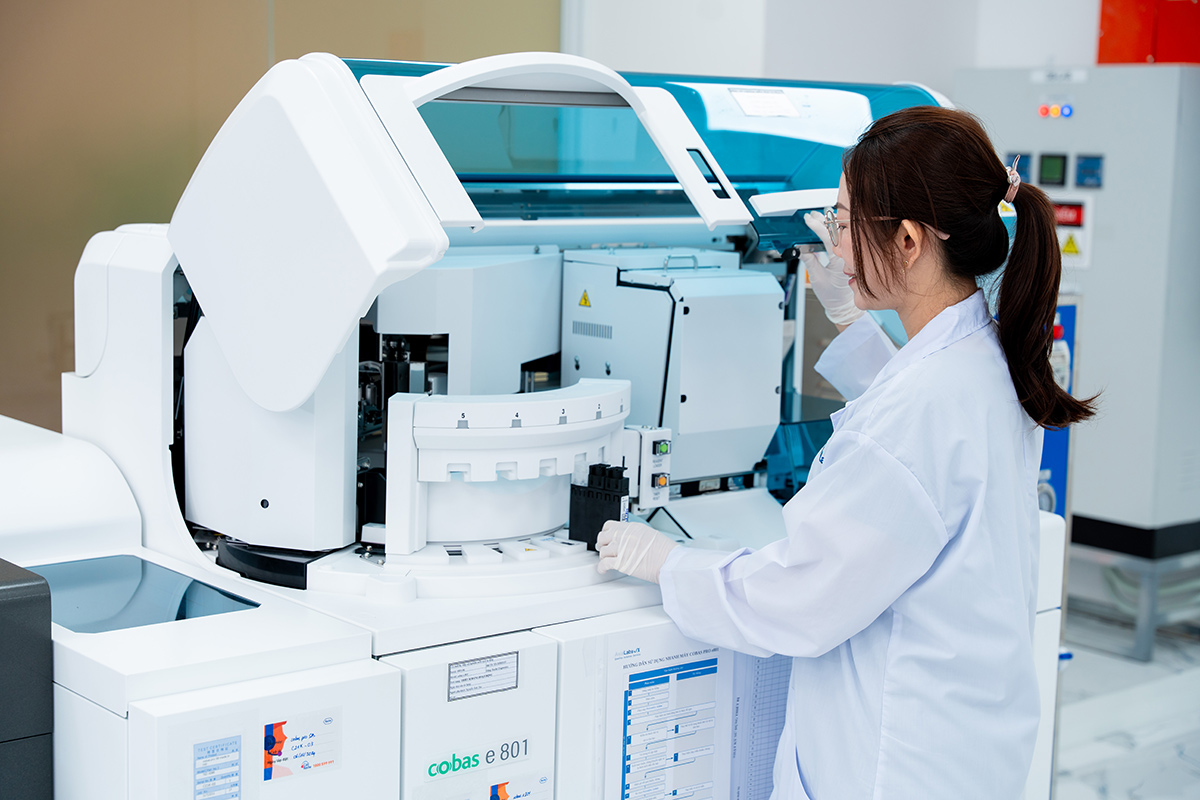
What This Means for AsiaLabs
For AsiaLabs, the opportunity worth watching is therefore broader than the growth of laboratory testing itself.
The more important development is the evolution of the businesses behind the tests.
A market moving from 180 million to 260 million annual test orders will require more equipment, more laboratories and more trained professionals.
But it may also require a different industry structure.
Central laboratories could serve larger geographic areas.
Collection networks could bring testing closer to patients.
Hospitals could outsource specialised diagnostics.
Smaller laboratories could become part of larger platforms.
Investment and strategic partnerships could accelerate this process.
The companies that create efficient networks connecting patients, healthcare providers, sample collection and specialised laboratory infrastructure may therefore be well positioned as Vietnam’s diagnostic market expands.
Vietnam’s Diagnostic Lab Market Is Becoming a Network Opportunity
Vietnam’s projected diagnostic laboratory growth should not be viewed simply as an increase from US$1.12 billion to US$1.83 billion.
Behind those numbers is a more fundamental transformation.
Testing volumes are increasing.
Diagnostic complexity is rising.
Specialised testing is becoming more valuable.
Technology is enabling laboratories to operate across larger networks.
And the economics of centralisation may increasingly favour diagnostic platforms capable of serving multiple hospitals, clinics and collection points.
The key question for investors and healthcare operators is therefore changing.
It is no longer simply:
How fast will Vietnam’s diagnostic testing market grow?
It is becoming:
What kind of diagnostic laboratory businesses will be built to serve that growth — and who will own those networks?
For AsiaLabs, that may be the opportunity that matters most.